some mornings we see the same sunrise the fifteen-year-old on his way to school the thirteen-year-old as he bounds into the room my beloved from where she sits with the cat in her cozy morning chair
some mornings we see the same sunrise the ripples of cloud layered in new light of pink and rose and white catch our eye and absorb our attentions if even for a fleeting moment
some mornings we see the same sunrise a common view accompanied by a unison awe that the day is indeed new and so are the possibilities that with hopes renewed life too can be brighter
some mornings we see the same sunrise and it dawns on us that we are all family children of God who are seen and beloved by the Maker who makes us one
some mornings we see the same sunrise and not us alone but you too for it rises for all even when unnoticed to shine on with light and promise
The onset of cold weather meant it was time to bring the potted succulent plants indoors. With cats around the house potted plants rarely make it undisturbed. So I decided to take the plants to my church office where they would be unbothered and also receive more sunlight from my office windows than they would at home.
The two succulents were planted in small clay pots. I decided to transfer them to another pot with sufficient space for them that would also make it easier to water and care for them. As I went to remove them from their little pots, I found it a difficult task. I had to carefully loosen them from the confines of the pots while not damaging their fragile foliage. When I finally removed them, I found them to be root bound. Their roots had grown extensively and wrapped around themselves with no additional space to grow and move. With caution I loosened the roots to give them room to spread out as I placed them in the new and bigger pot. I carefully packed the soil around the roots and gently watered the plants. I did this with the good hope for the possibility of new growth and flourishing life for these delicate but resilient plants.
This makes me wonder about my life and maybe it gets you wondering about your life too. How are we “root bound”? How are we restricted, confined and limited? How might we need to be transplanted from a situation, circumstance or habit to a place where we can thrive? Maybe the old way of doing things or ordering our lives now prevents us from growing into our fullest selves. What then needs to change?
We can ask these same questions of a congregation too. Churches like people outgrow what once worked and then need to consider where and how we might really thrive as followers of Jesus.
I am going to really give thought to these questions for myself. I would invite you to consider them too. As well, let us reflect on where God might like to replant us as God’s people so that we can grow and flourish. May we then trust that our Gardener God will tend us well.
High above the Ohio River in Ripley, Ohio, sits the home of the Rankin family. Reverend John Rankin, a Presbyterian minister and early abolitionist, along with his wife and children, hosted over two thousand enslaved African Americans as conductors on the Underground Railroad. The enslaved would make their way across the river—sometimes on a small boat captained by John Parker, an enslaved man who purchased his freedom and moved to Ripley—and then proceed up the northern bank of the river to the Rankin home where a lantern burned in the front window signaling the pathway to freedom. Mrs. Rankin would serve the newly freed a hot meal and dry their wet clothes as they rested for a few hours before journeying on to the next stop on the Underground Railroad—often in Red Oak, Ohio, in the home of another Presbyterian minister.
In the 1820’s, Rev. Rankin wrote a series of letters to his brother, a slaveowner in Virginia, petitioning him to free the enslaved and arguing for abolition. These letters were later published as Letters on American Slavery. Rev. Rankin’s letters along with his passionate speeches ignited the abolitionist movement and influenced many of its ardent proponents.
My family visited the Rankin home this past Friday. A question asked by Jadon to the tour guide prompted her to speak of the Rankin home as a spiritual and holy place. As I later reflected on our visit and this comment by the guide, I thought to myself that indeed it is a holy place for the work of liberation is holy work—the work of God to which we are all called and invited. Rev. Rankin and his wife and children lived out the gospel in the dangerous yet lifegiving work of liberating others. They accepted God’s call on their lives even with the risks involved because they knew God needed them for the crucial work of setting others free.
People remain bound today—enslaved by poverty, addiction, mental illness, racism, sexism and homophobia. The work of liberation remains the work of God’s people. It begins by informing ourselves and understanding our own role in what keeps others bound and keeps us from setting them free. It then continues as we make changes to our attitudes and actions—seeing people differently and doing something concrete to bring liberation to them. Much like the Rankin family, our role is often to offer space and room to others as they make their own way to freedom. Our welcome and our simple aid can make all the difference as they journey to a better and freer place.
Much like the Rankin family, our role is often to offer space and room to others as they make their own way to freedom.
Enslaved men, women and children stood on the southern bank of the Ohio River looking and longing for the light in the window of the Rankin home—a light they knew would lead them to freedom. People look to us too. May we be light for their footsteps. May we make their path brighter and easier with our goodness, kindness and tenacious commitment to their liberation.
I am about to do a new thing; now it springs forth, do you not perceive it? I will make a way in the wilderness and rivers in the desert. Isaiah 43:19
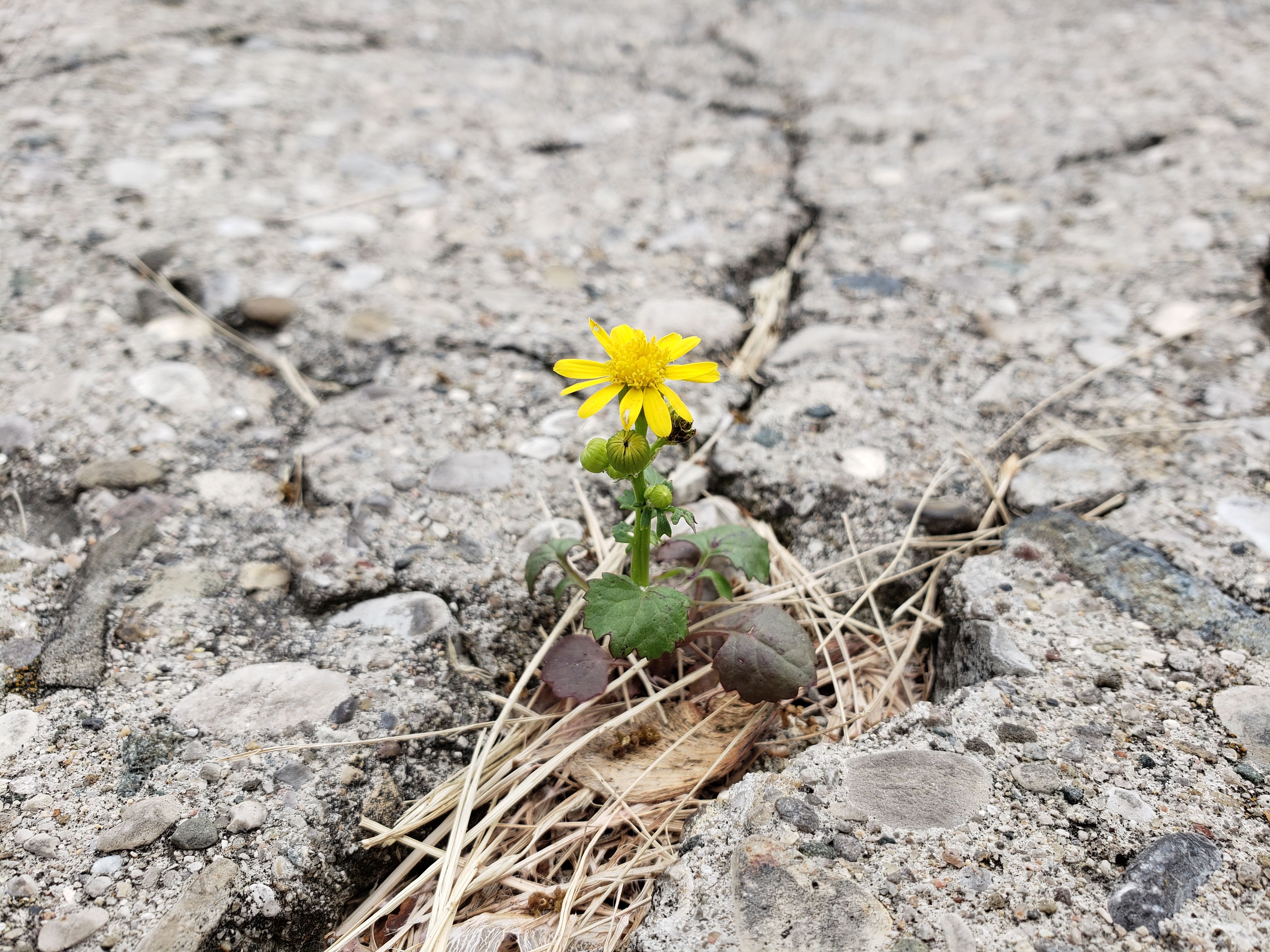
I knew nothing of surprise lilies before living in Missouri. They surprised me indeed when I first saw the pink flowers adorned on tall slender leafless stems suddenly appear among gardens and various landscapes late in summer. From where did they come? How did they grow up so quickly? What should I call them? To an often dry and dusty end of summer terrain these unexpected flowers brought grace and beauty.
What a great name for a flower— “SURPRISE Lily!” It is well suited for a plant that appears so suddenly and unexpectantly in unanticipated places. What a wonder and joy it offers with its simple stem yet delicate and almost translucent pink petals. The surprise lily serves too as a reminder that you just never know when nature will wow you!
God is about surprises too. As soon as we think we have seen it all or know it all—SURPRISE—God shows up when and where we did not expect! Typically, we think of God creating the world eons ago while forgetting that God continues to create today. “I am about to do a new thing,” God said to Isaiah. A new thing. God is still in the habit of bringing forth newness of life. Oftentimes, this comes as such a surprise to us. We live wilderness and desert lands not expecting rivers and byways. But then God springs up in our path with something new, beautiful and joyous. Our task is to keep our eyes open. “Do you not perceive it?” God asks. “Yes!” we want to be able to say!
Sometimes the surprise comes from within. Suddenly, we are hit with a sense of wonder or struck with gratitude. Other times, an unexpected hope or courage rises in us and we are ready to be about the new thing God is doing in us. We find ourselves surprised yet immensely grateful to be alive and a part of what God is up to in this world.
So keep your chin up. You might see a surprise lily in your neighborhood. Or, better yet, you might be surprised to find God doing something amazing around you or deep within your heart. Wherever you are surprised take in the beauty of it all and be filled with gratitude for the creative goodness of our God.
As a kid I picked blackberries with my mother and grandmother on hot Southern summer days. The blackberries grew wild in pastures and along roadsides. I distinctly remember picking with my grandma the berries that grew along a curvy country road near my home. The tall and broad bushes offered buckets of the fruit that we picked as cars passed by. Every blackberry picking outing included my mom and grandma recalling how once while picking blackberries angry bees chased them through a pasture. They always recounted this harrowing moment with such lightheartedness. They delighted in their speedy escape.
Honestly, I never did and still do not care too much for fresh blackberries. But bake them into a cobbler and top with vanilla ice cream and I can eat them until as Southerners used to say, “I’m full as tick.” Blackberry cobbler was the taste of summer. And, oh, how I enjoy it still.
The work of God into which we are invited and called is much like blackberry picking. We venture out to pick the fruit of vines we neither planted nor tended—vines that are often wild and in wild places. But pick we do and gather a harvest that is beautiful, bright and satisfying. Sure, there is some danger involved but it is well worth it at the end of the day when you enjoy the result of your labor. And all the while you find yourself filled with gratitude for what God provides and what God does even along roadsides and among wild places.
Jesus once told his followers that the harvest is plentiful but the laborers are few. He said this as he looked with compassion on the crowds of helpless and hurting folks and then he immediately sent his disciples out to do his work. Jesus needed their help—he needed their hands, voices and hearts to heal and help. Jesus needs us too. So he sends us out along roadsides and into wild places to do the good work of God.
So, where is he sending you, me and us? Well, we may not know for certain but we can be sure it is among the hurting and helpless. So let’s go! And remember the harvest is always beautiful, bright and satisfying—and there may even be cobbler!
My mother-in-law, Darlene, loved daisies. My wife, Terry, tried on and off to grow daisies but despite her success with many other perennials the daisies would never establish themselves and return. Darlene died in August of 2011. The follow spring, to our surprise, daisies appeared in our yard. Season after season, they grew and expanded. So much so that we could take family pictures among them in the spring. We loved those daisies.
When we moved to Ohio in the summer of 2018, we harvested seeds from the daisies and brought them with us. We finally planted them in the summer of 2020 with uncertainty about whether they would grow. Grow they did and this spring they are flourishing. One of these is pictured above. They bring us such joy with their brightness and simply beauty and how they help us recall and remember Darlene.
Life is like that. You never know when new life and beauty will unexpectedly show up. All you can do is celebrate when they do and savor the wonder of it all.
Life is like that. You never know when new life and beauty will unexpectedly show up. All you can do is celebrate when they do and savor the wonder of it all.
As well, don’t underestimate the power of little things—of seed themselves and of collecting a few seeds and casting them on fresh soil. Our small deeds of kindness, goodness and love can really make a difference. What is small can often impact others abundantly.
So, keep a look out for new life and beauty. Do something small yet deliberate and meaningful for someone day. You just don’t know what might spring up and the lasting impact it will make.
I wake in the dark to the sound of birdsong with optimism they sing of hope with expectation they sing of promise with exhilaration they sing of new light
They remember what I am quick to forget that our Creator turns the planet again and again toward the light into a new day into a new future into a better world
Exuberant birdsong Emerging crocus Emanating light all speak of resurrection of the promise of life made new of life made wholesome of life made complete
I wake in the dark but I step with conviction that all will be changed that light will prevail that life is just beginning for me for you for all of us